Friday, 11 October 2013

Performance Evaluation

Physical theatre Performance Evaluation


Today we performed our physical theatre pieces in front of the whole strand and various theatre teachers. EVERYONES WORK WAS AMAZING! So many people in the strand did really well today. 


*SNAPS FOR THEATRE*


Overall, in my opinion our piece went extremely well, and I am truly proud of what we achieved today. I believe this success was reflected in our BRIT grade 7/10. Normally I find that before any performance I get extremely nervous and start losing confidence in my work, however today I was very calm and collected before our performance. I think this is because the right amount of rehearsal time allowed me to really understand the foundations of our piece and to know every single detail and its significance within the performance. No mistakes were made because of our extensive rehearsals and all of the movement or sections of our piece flowed really well from one to another. Throughout our piece I felt very much like I was "living in the moment" and experiencing the emotions evoked within our piece similarly if not more than our audience. The poetical elements of our piece really brought our work to life and I think our decision to not include any music or backing track to our piece payed off. It allowed the poetry to speak for itself. The only things I can think of for us improving on todays performance are: 

  • More  organic improvised moments
  • More clarity in transitions
  • consistently maintained natural fluidity
I am very happy with the way that our performance went today and look forward to adapting it and creating a whole group piece in the coming weeks. 

Monday, 7 October 2013

Rehearsal notes #5

Today rehearsed all the various sections in our piece, and began to knit them together and iron out our transitions. 

The new updated chronological order of our piece is as follows:

Paper airplanes 
"faces to the foe"
"Charlie team"
Soldier crawl
Explosions
Gas attack
Remembrance
mother sequence 

We then ran through the whole piece over and over and OVER to ensure that we both understood and knew the piece backwards and forwards and inside out. I am very happy with the way today's rehearsal went and i feel like today was the most productive and efficient rehearsal that we have had yet. No distractions, lots of hard work, commitment and energy meant that today we finally got to that stage where our performance piece is ready to be performed and tweaks or edits and no longer necessary. All we can do now is keep running through the movement whilst trying to keep the emotional element of the piece new and different and refreshed every time we perform the piece. 

What went well: Lots of material was refined and lots of run throughs took place which i am very happy about. 

How we can improve: Even more energy and a sense of flow is required before our final performance.

Friday, 4 October 2013

Rehearsal notes #4

REHEARSAL 4


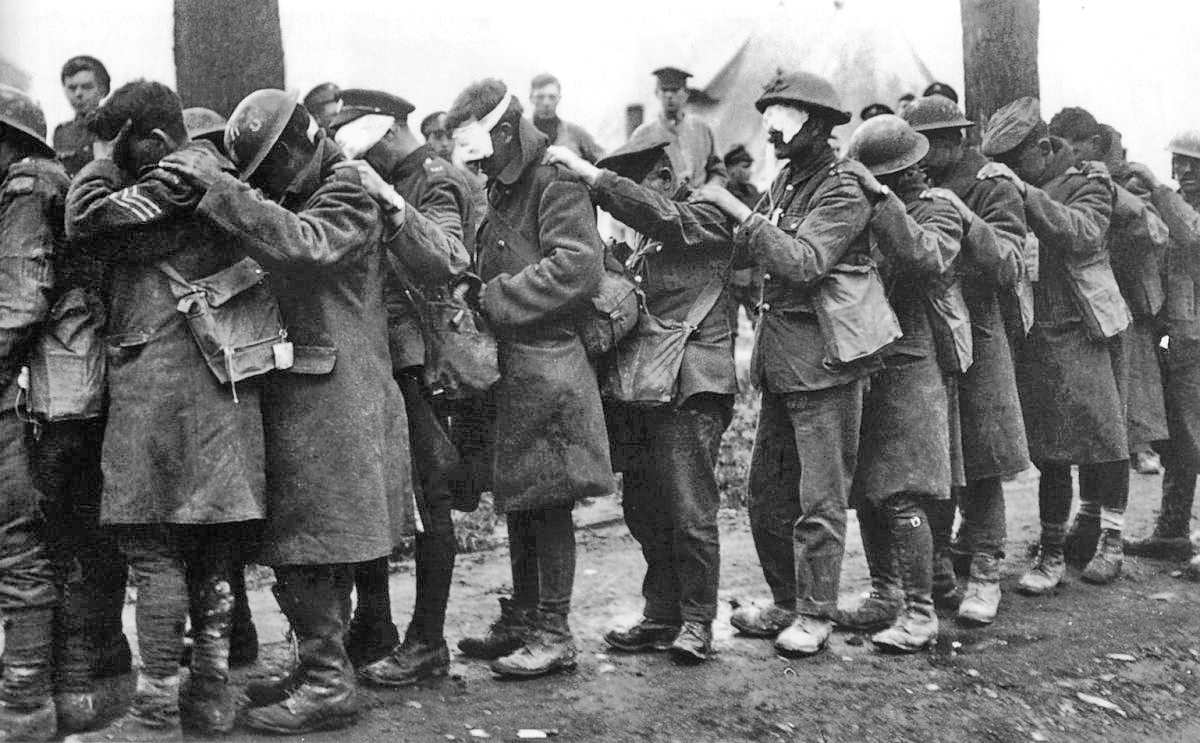
Today we created and rehearsed the gas attack section of our piece.

Myself and Laure began with a warm up, and then ran through all the different sections of our piece. this really helped me as I seemed to have forgotten a few things here and there. We also smoothed out and refined the airplane section of our piece to make it more clear and readable to our audience. We also watched some videos on youtube to help inform our understanding of gas attacks.

Here are are small selection of things we looked at:


We wanted to include some religious references in our piece so therefore we combined the experimental movement we came up with in today's rehearsal with the clearest and simplest physical representation of religion: The cross.

In order to create a transition between our previous movement and the gas attack section, we had the idea that the soldier whom is about to be gassed (me) can be physically preparing for war.

Our thought process behind this was that a soldier dressing, and preparing themselves for war could also symbolically represent a young man preparing himself to die. We want our audience to subliminally anticipate the soldier's death.

What went well: Lots of improvised material was created in today's rehearsal!

How we can improve: Next rehearsal I will ensure that myself and laure do not distracted from our work by other people. 


Sunday, 29 September 2013

Rehersal notes #3


Today we created and rehearsed the paper airplane section of our piece. This was originally inspired by the war poem 'To Tony' that laure found as stimulus. The poem is in the form of a letter to a lover in the war, and also has lots of visually evocative stanzas and lines that are ideal for and improv exploration. We developed this into a small section where both used and laure are facing away from one another writing a letter. We then write the words "courage" and "faith" on our pieces of paper and proceed to fold and make paper airplanes and play with them like children. This was created because we want our final piece to have a clear narrative that tells a story of growth and contains a story emotional journey within it. The child like nature of this section feels like it should be the beginning of our piece so that we can grow and show a clear journey and destination in the piece. Also we discussed in great detail the fact that children 'playing with toys' was symbolic of the young naive soldiers of the First World War using their rifles as if they were toys. This discussion was very effective for me because once we had added another layer of interpretation to our idea I found that I could connect with the work more emotionally. This deeper emotional connection with the work allowed myself and Laure to work more physically and efficiently. 

We also went over and ironed out what we created in our last rehearsal today.

What went well: I feel a lot more emotionally connected to our work now I understand what we're doing, and WHY were doing it. 


How we can improve: More feasible material needs to be created next rehearsal. Less improve. 

Saturday, 21 September 2013

Rehearsal notes #2

Today after a long and detailed discussion we created and rehearsed the standoff section of our piece. Within this movement section of our piece we both start back to back and then crawl backwards into a laying down at attention position. We then move towards each other three times. This was crated and inspired by our discussion about my own personal time at army cadets. We talked about what it was like, and the exercises and workshops that I did whilst at army cadets. I then proceeded to show and demonstrate to Laure some of the various things I have learnt through my army cadet training. This conversation then evolved and developed into a spontaneous physical improvisation. This was effective as it gave us a chance to take a small idea and run with it. Through this we were able to expand on our initial ideas and develop new ideas. 

What went well: I have a much better understanding of our piece and where we want to go with it. 

How we can improve: less talking, more moving! 

We also decided on what stanzas of our war poems we actually want to use as text in out piece. We were looking for evocative stanzas of poetry that are rich in imagery and passion. We wanted lines of poetry that people would remember, that would ring in our audiences ears after our performance. But most of all we were looking for text that inspired us to create a physical performance piece. 

AND THE WINNERS ARE:

The wheels lurched over sprawled dead
But pained them not, though their bones crunched,
Their shut mouths made no moan,
They lie there huddled, friend and foeman,
Man born of man, and born of woman,
And shells go crying over them
From night till night and now.

The air is loud with death,
The dark air spurts with fire,
The explosions ceaseless are.

As the stars that shall be bright when we are dust,
Moving in marches upon the heavenly plain,
As the stars that are starry in the time of our darkness,
To the end, to the end, they remain.

               
Greybeard philosophy has sought in books         
    And argument this truth,         
That man is greater than his pain, but you           
    Have learnt it in your youth.   

They went with songs to the battle, they were young,
Straight of limb, true of eye, steady and aglow.
They were staunch to the end against odds uncounted,
They fell with their faces to the foe.

Thursday, 19 September 2013

Music

After looking at the following songs we decided we don't want to use any backing music, in case it takes away from the poetical overtones of our piece.


Tuesday, 17 September 2013

The poems

DEAD MAN'S DUMP by ISAAC ROSENBERG


The plunging limbers over the shattered track
Racketed with their rusty freight,
Stuck out like many crowns of thorns,
And the rusty stakes like sceptres old
To stay the flood of brutish men
Upon our brothers dear.


The wheels lurched over sprawled dead
But pained them not, though their bones crunched,
Their shut mouths made no moan,
They lie there huddled, friend and foeman,
Man born of man, and born of woman,
And shells go crying over them
From night till night and now.


Earth has waited for them,
All the time of their growth
Fretting for their decay:
Now she has them at last!
In the strength of their strength
Suspended---stopped and held.


What fierce imaginings their dark souls lit
Earth! have they gone into you?
Somewhere they must have gone,
And flung on your hard back
Is their soul's sack,
Emptied of God-ancestralled essences.
Who hurled them out? Who hurled?


None saw their spirits' shadow shake the grass,
Or stood aside for the half used life to pass
Out of those doomed nostrils and the doomed mouth,
When the swift iron burning bee
Drained the wild honey of their youth.


What of us, who flung on the shrieking pyre,
Walk, our usual thoughts untouched,
Our lucky limbs as on ichor fed,
Immortal seeming ever?
Perhaps when the flames beat loud on us,
A fear may choke in our veins
And the startled blood may stop.


The air is loud with death,
The dark air spurts with fire,
The explosions ceaseless are.


Timelessly now, some minutes past,
These dead strode time with vigorous life,
Till the shrapnel called 'an end!'
But not to all. In bleeding pangs
Some borne on stretchers dreamed of home,
Dear things, war-blotted from their hearts.


A man's brains splattered on
A stretcher-bearer's face;
His shook shoulders slipped their load,
But when they bent to look again
The drowning soul was sunk too deep
For human tenderness.


They left this dead with the older dead,
Stretched at the cross roads.


Burnt black by strange decay
Their sinister faces lie
The lid over each eye,
The grass and coloured clay
More motion have than they,
Joined to the great sunk silences.


Here is one not long dead;
His dark hearing caught our far wheels,
And the choked soul stretched weak hands
To reach the living word the far wheels said,
The blood-dazed intelligence beating for light,
Crying through the suspense of the far torturing wheels
Swift for the end to break,
Or the wheels to break,
Cried as the tide of the world broke over his sight.


Will they come? Will they ever come?
Even as the mixed hoofs of the mules,
The quivering-bellied mules,
And the rushing wheels all mixed
With his tortured upturned sight,
So we crashed round the bend,
We heard his weak scream,
We heard his very last sound,
And our wheels grazed his dead face.


 TO A SOLDIER IN HOSPITAL by WINIFRED M. LETTS


COURAGE came to you with your boyhood’s grace         
    Of ardent life and limb.            
Each day new dangers steeled you to the test, 
    To ride, to climb, to swim.       
Your hot blood taught you carelessness of death                     
        With every breath. 
               
So when you went to play another game             
    You could not but be brave:   
An Empire’s team, a rougher football field,         
    The end—perhaps your grave.                     
What matter? On the winning of a goal 
        You staked your soul.            
               
Yes, you wore courage as you wore your youth
    With carelessness and joy.     
But in what Spartan school of discipline        
    Did you get patience, boy?     
How did you learn to bear this long-drawn pain
        And not complain? 
               
Restless with throbbing hopes, with thwarted aims,       
    Impulsive as a colt,             
How do you lie here month by weary month     
    Helpless, and not revolt?         
What joy can these monotonous days afford     
        Here in a ward?       
               
Yet you are merry as the birds in spring,                       
    Or feign the gaiety,
Lest those who dress and tend your wound each day    
    Should guess the agony.          
Lest they should suffer—this the only fear         
        You let draw near.          
               
Greybeard philosophy has sought in books         
    And argument this truth,         
That man is greater than his pain, but you           
    Have learnt it in your youth.   
You know the wisdom taught by Calvary                      
        At twenty-three.    
               
Death would have found you brave, but braver still        
    You face each lagging day,      
A merry Stoic, patient, chivalrous,           
    Divinely kind and gay.                        40
You bear your knowledge lightly, graduate         
        Of unkind Fate.        
               
Careless philosopher, the first to laugh,
    The latest to complain,             
Unmindful that you teach, you taught me this           
    In your long fight with pain:    
Since God made man so good—here stands my creed—              
        God’s good indeed.               


THE WIND ON THE DOWNS by MARIAN ALLEN
I like to think of you as brown and tall,
As strong and living as you used to be,
In khaki tunic, Sam Brown belt and all,
And standing there and laughing down at me.
Because they tell me, dear, that you are dead,
Because I can no longer see your face,
You have not died, it is not true, instead,
You seek adventure some other place.
I hear you laughing as you used to,
Yet loving all the things I think of you;
And knowing you are happy, should I grieve?
You follow and are watchful where I go;
How should you leave me, having loved me so?
We walked along the towpath, you and I,
Beside the sluggish-moving, still canal;
It seemed impossible that you should die;
I think of you the same and always shall.
We thought of many things and spoke of few,
And life lay all uncertainly before,
And now I walk alone and think of you,
And wonder what new kingdoms you explore.
Over the railway line, across the grass,
While up above the golden wings are spread,
Flying, ever flying overhead,
Here still I see you khaki figure pass,
And when I leave meadow, almost wait,
That you should open first the wooden gate.


FOR THE FALLEN by LAURENCE BINYON


With proud thanksgiving, a mother for her children,
England mourns for her dead across the sea.
Flesh of her flesh they were, spirit of spirit,
Fallen in the cause of the free.

Solemn the drums thrill: Death august and royal
Sings sorrow up into immortal spheres.
There is music in the midst of desolation
And a glory that shines upon our tears.

They went with songs to the battle, they were young,
Straight of limb, true of eye, steady and aglow.
They were staunch to the end against odds uncounted,
They fell with their faces to the foe.

They shall grow not old, as we that are left grow old;
Age shall not weary them, nor the years condemn.
At the going down of the sun and in the morning
We will remember them.

They mingle not with laughing comrades again;
They sit no more at familiar tables of home;
They have no lot in our labour of the day-time;
They sleep beyond England's foam.

But where our desires are and our hopes profound,
Felt as a well-spring that is hidden from sight,
To the innermost heart of their own land they are known
As the stars are known to the Night;

As the stars that shall be bright when we are dust,
Moving in marches upon the heavenly plain,
As the stars that are starry in the time of our darkness,
To the end, to the end, they remain.

NO MAN’S LAND by JAMES H. KNIGHT-ADKIN

NO Man’s Land is an eerie sight
At early dawn in the pale gray light.        
Never a house and never a hedge          
In No Man’s Land from edge to edge,   
And never a living soul walks there                 
To taste the fresh of the morning air;—
Only some lumps of rotting clay,              
That were friends or foemen yesterday.              

What are the bounds of No Man’s Land?             
You can see them clearly on either hand,                     
A mound of rag-bags gray in the sun,     
Or a furrow of brown where the earthworks run             
From the eastern hills to the western sea,          
Through field or forest o’er river and lea;             
No man may pass them, but aim you well                    
And Death rides across on the bullet or shell.     

But No Man’s Land is a goblin sight         
When patrols crawl over at dead o’ night;            
Boche or British, Belgian or French,         
You dice with death when you cross the trench.                       
When the “rapid,” like fireflies in the dark,          
Flits down the parapet spark by spark,  
And you drop for cover to keep your head          
With your face on the breast of the four months’ dead.               

The man who ranges in No Man’s Land         
Is dogged by the shadows on either hand           
When the star-shell’s flare, as it bursts o’erhead,            
Scares the gray rats that feed on the dead,         
And the bursting bomb or the bayonet-snatch  
May answer the click of your safety-catch,                  
For the lone patrol, with his life in his hand,        

Is hunting for blood in No Man’s Land.

Friday, 13 September 2013

Rehearsal notes #1


Today was more of a discussion based rehearsal. It disappointed me that little was done in terms of physicalizing actual material for our final piece. 

However we did do a lot in terms of talking about what we want to do. It emerged today that myself and Laure are both very passionate about poetry and we both want to use poetry as our main stimulus for creating work. We set ourselves a homework to find 5 war poems that we both like and want to use for stimuli.

These are the poems that we chose:

DEAD MAN'S DUMP by ISAAC ROSENBERG
FOR THE FALLEN by LAURENCE BINYON
THE WIND ON THE DOWNS by MARIAN ALLEN
TO A SOLDIER IN HOSPITAL by WINIFRED M. LETTS

NO MAN’S LAND by JAMES H. KNIGHT-ADKIN

Wednesday, 11 September 2013

Steven Berkoff


Steven Berkoff was born in Stepney, London. After studying drama and mime in London and Paris, he entered a series of repertory companies and in 1968 formed the London Theatre Group. His plays and adaptations have been performed in many countries and in many languages. Among the many adaptations Berkoff has created for the stage, directed and toured, are Kafka's Metamorphosis and The Trial, Agamemnon after Aeschylus, and Poe's The Fall of the House of Usher. He has directed and toured productions of Shakespeare's Coriolanus also playing the title role, Richard II, Hamlet and Macbeth, as well as Oscar Wilde's Salome.

THE PLAYS: Berkoff's original stage plays include East, West, Messiah: Scenes from a Crucifixion, The Secret Love Life of Ophelia, Decadence, Harry's Christmas, Massage, Acapulco and Brighton Beach Scumbags. He has performed his trilogy of solo shows, One Man, Shakespeare's Villains and Requiem for Ground Zero, in venues all over the world.


THE FILMS: Steven has acted in include A Clockwork Orange, Barry Lyndon, Octopussy, Beverly Hills Cop, Rambo, Under the Cherry Moon, Absolute Beginners and The Krays. He directed and co- starred with Joan Collins in the film version of his play Decadence.


THE BOOKS: He has published a variety of books on the theatre such as the production journals I am Hamlet, Meditations on Metamorphosis and Coriolanus in Deutschland. Berkoff's work has led him to traverse the globe, and his love for travel is apparent in his book Shopping in the Santa Monica Mall: The Journals of a Strolling Player.


SOURCE: http://www.stevenberkoff.com/biog.html


Steven Berkoff (born 3 August 1937) is an English actor, author, playwright and theatre director. As an actor, he is best known for his performances in villainous roles, such as Lt. Col Podovsky in Rambo: First Blood Part IIGeneral Orlov in the James Bond film Octopussy,Victor Maitland in Beverly Hills Cop and Adolf Hitler in the TV mini-series War and Remembrance. His greatest commercial success has been The Tourist, which grossed US$278 million worldwide.


Berkoff started his theatre training in the Repertory Company at Her Majesty's Theatre in Barrow-in-Furness, for approximately two months, in 1962.[11]
As well as an actor, Berkoff is a noted playwright and theatre director, with a unique style of writing and performance.[12] His earliest plays are adaptations of works by Franz KafkaThe Metamorphosis (1969); In the Penal Colony (1969) and The Trial (1971). In the 1970s and 1980s, he wrote a series of verse plays including East (1975), Greek (1980) and Decadence (1981), followed by West (1983), Sink the Belgrano! (1986),Massage (1997) and The Secret Love Life of Ophelia (2001). Berkoff described Sink the Belgrano! as "even by my modest standards ... one of the best things I have done".[13]
Drama critic Aleks Sierz describes Berkoff's dramatic style as "In-yer-face theatre":
The language is usually filthy, characters talk about unmentionable subjects, take their clothes off, have sex, humiliate each another, experience unpleasant emotions, become suddenly violent. At its best, this kind of theatre is so powerful, so visceral, that it forces audiences to react: either they feel like fleeing the building or they are suddenly convinced that it is the best thing they have ever seen and want all their friends to see it too. It is the kind of theatre that inspires us to use superlatives, whether in praise or condemnation."[14]
In 1988, Berkoff directed an interpretation of Salome by Oscar Wilde, performed in slow motion, at the Gate TheatreDublin.[15] For his first directorial job at the UK's Royal National Theatre,[16] Berkoff revived the play with a new cast at the Lyttelton Auditorium; it opened in November 1989.[17] In 1998, his solo play Shakespeare's Villains premièred at London's Haymarket Theatre and was nominated for a Society of London Theatre Laurence Olivier Award for Best Entertainment.[18]
In a 2010 interview with guest presenter Emily Maitlis on The Andrew Marr Show, Berkoff stated that he found it "flattering" to play evil characters, saying that the best actors assumed villainous roles.[19] In 2011, Berkoff revived a previously performed one-man show at the HammersmithRiverside Studios, titled One Man. It consisted of two monologues; the first was an adaptation of Edgar Allan Poe's short story The Tell-Tale Heart, the second a piece called Dog, written by Berkoff, which was a comedy about a loud-mouthed football fan and his dog. In 2013, Berkoff performed his most recent play, An Actors Lament at the Sinden Theatre in Tenterden, Kent; it is his first verse play since Decadence in 1981.[20]

Film[edit]

In film, Berkoff has played villains such as the corrupt art dealer Victor Maitland in Beverly Hills Cop, gangster George Cornell in The Krays, the Soviet officer Colonel Podovsky in Rambo: First Blood Part II, and General Orlov in the James Bond film Octopussy. Berkoff has stated that he accepts roles in Hollywood only to subsidise his theatre work, and that he regards many of the films in which he has appeared as lacking artistic merit.[21]
Berkoff also appeared in the 1967 Hammer film Prehistoric Women, the 1980 film McVicar, and the 1996 Australian biographical film Flynn. In theStanley Kubrick films A Clockwork Orange (1971) and Barry Lyndon (1975), Berkoff plays a police officer and gambler aristocrat Lord Ludd.
Berkoff was the main character voice in Expelling The Demon (1999), a short animation with music by Nick Cave. It received the award for Best Film at the Ukraine Film Festival. He has a cameo in the 2008 film The Cottage. Berkoff appeared in the 2010 British gangster film The Big I Am as "The MC", and in the same year portrayed the antagonist in The Tourist. Berkoff portrayed Dirch Frode, attorney to Henrik Vanger (Christopher Plummer), in David Fincher's 2011 adaptation of The Girl with the Dragon Tattoo. Another 2011 credit is the independent film, Moving Target.
In 1994, he both appeared in and directed the film version of his verse play Decadence. Filmed in Luxembourg, it co-stars Joan Collins.

Television[edit]

In television, Berkoff had early roles in episodes of The Avengers and UFO. Other TV credits include: Hagath, in the episode "Business as Usual" ofStar Trek: Deep Space NineStilgar, in the mini-series Children of Dune; gangster Mr Wiltshire in one episode of Hotel Babylon; lawyer Freddie Eccles in "By the Pricking of My Thumbs", an episode of Marple; and Adolf Hitler in the mini-series War and Remembrance. In 1998, he made a guest appearance in the Canadian TV series La Femme Nikita (in the episode "In Between").
In 2010, Berkoff played former Granada Television chairman Sidney Bernstein for the BBC Four drama, The Road to Coronation Street. He has played the historical Florentine preacher Girolamo Savonarola in two separate TV productions: the 1991 TV film A Season of Giants, and the 2011 series The Borgias. Berkoff appears as himself in the "Science" episode of the British current affairs satire Brass Eye (1997), warning against the dangers of the fictional environmental disaster "Heavy Electricity". In September 2012, Berkoff appeared in the Doctor Who episode "The Power of Three".[22]

Other work[edit]

In 1996, Berkoff appeared as the Master of Ceremonies in a BBC Radio 2 concert version of Kander & Ebb's Cabaret. He provided the voice-over for the N-Trance single "The Mind of the Machine", which rose to No. 15 in the UK Singles Chart in August 1997. He appeared in the opening sequence to Sky Sports' coverage of the 2007 Heineken Cup Final, modelled on a speech by Al Pacino in the film Any Given Sunday (1999).
Berkoff voices the character General Lente, commander of the Helghan Third Army, in the first entry of the PlayStation Killzone video game series. With Andy Serkis and others, he provides motion capture and voice performance for the PlayStation 3 game Heavenly Sword, as one of the main villains: General Flying Fox.
Berkoff appeared in the British Heart Foundation's two-minute public service advertisement, Watch Your Own Heart Attack, broadcast on ITV in August 2008.[23] In 2010, he also presented the BBC Horizon episode, "Infinity and Beyond".
He is patron of Brighton's Nightingale Theatre, a fringe theatre venue.[24]

Critical assessment[edit]

According to Annette Pankratz, in her 2005 Modern Drama review of Steven Berkoff and the Theatre of Self-Performance by Robert Cross: "Steven Berkoff is one of the major minor contemporary dramatists in Britain and – due to his self-fashioning as a bad boy of British theatre and the ensuing attention of the media – a phenomenon in his own right."[25] Pankratz further asserts that Cross "focuses on Berkoff's theatre of self-performance: that is, the intersections between Berkoff, the public phenomenon and Berkoff, the artist."[25]

Awards and honours[edit]

In 1991, Berkoff's play Kvetch won the Evening Standard Theatre Award for Best Comedy. In 1997, Berkoff won the first Total Theatre Lifetime Achievement Award.[26] In 1998, he was nominated for a The Society of London Theatre's Laurence Olivier Award for Best Entertainment for his one-man show Shakespeare's Villains.[18] In 1999, the 25th-anniversary revival of the play East, directed by Berkoff, received the Stage Award for Best Ensemble work at the Edinburgh Festival Fringe. In 2000, he won the LA Weekly Theater Award for Solo Performance, again for Shakespeare's Villains.[10][27] Also in 2000, his play Messiah, Scenes from a Crucifixion received a Scotsman Fringe First Award at the Edinburgh Fringe Festival.[28] In 2001, The Secret Love Life of Ophelia won a Bank of Scotland Herald Angel.[29]
The Berkoff Performing Arts Centre at Alton CollegeHampshire, is named for Berkoff.[30] Attending the Alton College ceremony to honour him, he stated:
I remember in my younger days questioning what life means. Finding a place like the Berkoff Performing Arts Centre, I found myself as a person. Having a place like this sowed the seeds of the man I think I am today. A place like this is the first step in changing the life of a person. There's something about theatre that draws people together because it's something connected with the human soul. All over the UK, the performing arts links people with a shared humanity as a way to open the doors to the mysteries of life. We should never underestimate the power of the theatre. It educates, informs, enlightens and humanises us all.
He taught a drama master-class later that day, and performed Shakespeare's Villains for an invited audience that evening.

Personal life[edit]

Berkoff lives with his partner, Clara Fisher, in East London.[1][10]
In 1996, Berkoff won Berkoff v. Burchill, a libel civil action that he brought against Sunday Times journalist Julie Burchill after she published comments suggesting that he was "hideously ugly". The judge ruled for Berkoff, finding that Burchill's actions "held him to ridicule and contempt."[31]

Political and religious views[edit]

Berkoff has spoken and written about how he believes Jews and Israel to be regarded in Britain. In a January 2009 interview with The Jewish Chronicle, in which he discussed anti-Israel sentiment in the aftermath of the Gaza War, he said:
There is an in-built dislike of Jews. Overt antisemitism goes against the British sense of fair play. It has to be covert and civilised. So certain playwrights and actors on the left wing make themselves out to be stricken with conscience. They say: 'We hate Israel, we hate Zionism, we don't hate Jews.' But Zionism is the very essence of what a Jew is. Zionism is the act of seeking sanctuary after years and years of unspeakable outrages against Jews. As soon as Israel does anything over the top it's always the same old faces who come out to demonstrate. I don't see hordes of people marching down the street against Mugabe when tens of thousands are dying every month in Zimbabwe.[32]
Interviewer Simon Round noted that Berkoff was also keen to express his view that right-wing Israeli politicians, such as Ariel Sharon and Benjamin Netanyahu, were "wretched".[32] Asked if British antisemitism manifested itself in theatre, Berkoff responded: "They quite like diversity and will tolerate you as long as you act a bit Gentile and don't throw your chicken soup around too much. You are perfectly entitled occasionally even to touch the great prophet of British culture, Shakespeare, as long as you keep your Jewishness well zipped up."[32] Berkoff also referred to the Gaza war as a factor in writing Biblical Tales: "It was the recent 'Gaza' war and the appalling flack that Israel received that prompted me to investigate ancient Jewish values."[33]
Speaking to The Jewish Chronicle in May 2010, Berkoff criticised the Bible but added, "it inspires the Jews to produce Samsons and heroes and to have pride". Berkoff went on to say of the Talmud in the same article: "As Jews, we are so incredibly lucky to have the Talmud, to have a way of re-interpreting the Torah. So we no longer cut off hands, and slay animals, and stone women."[34]
In a Daily Telegraph travel article written while visiting Israel in 2007, Berkoff described Melanie Phillips' book Londonistan: How Britain is Creating a Terror State Within, as "quite overwhelming in its research and common sense. It grips me throughout the journey."[35]
In 2012, Berkoff, with others, wrote in support of Israel's national theatre, Habima, performing in London.[36]

References in popular culture[edit]

In the 1989 romantic comedy The Tall Guy, struggling actor Dexter King (Jeff Goldblum) auditions unsuccessfully for an imaginary "Berkoff play" called England, My England. In the audition, characters dressed as skinheads swear repetitively at each other and a folding table is kicked over. Afterwards, Dexter's agent Mary (Anna Massey) muses, "I think he's probably mad ..."
"I'm scared of Steven Berkoff" is a line in the lyrics of the song "I'm Scared" by Queen guitarist Brian May, issued on his 1993 debut solo album Back to the Light.[37] May has declared himself to be an admirer of Berkoff[38] and his wife, Anita Dobson, has appeared in several of Berkoff's plays.